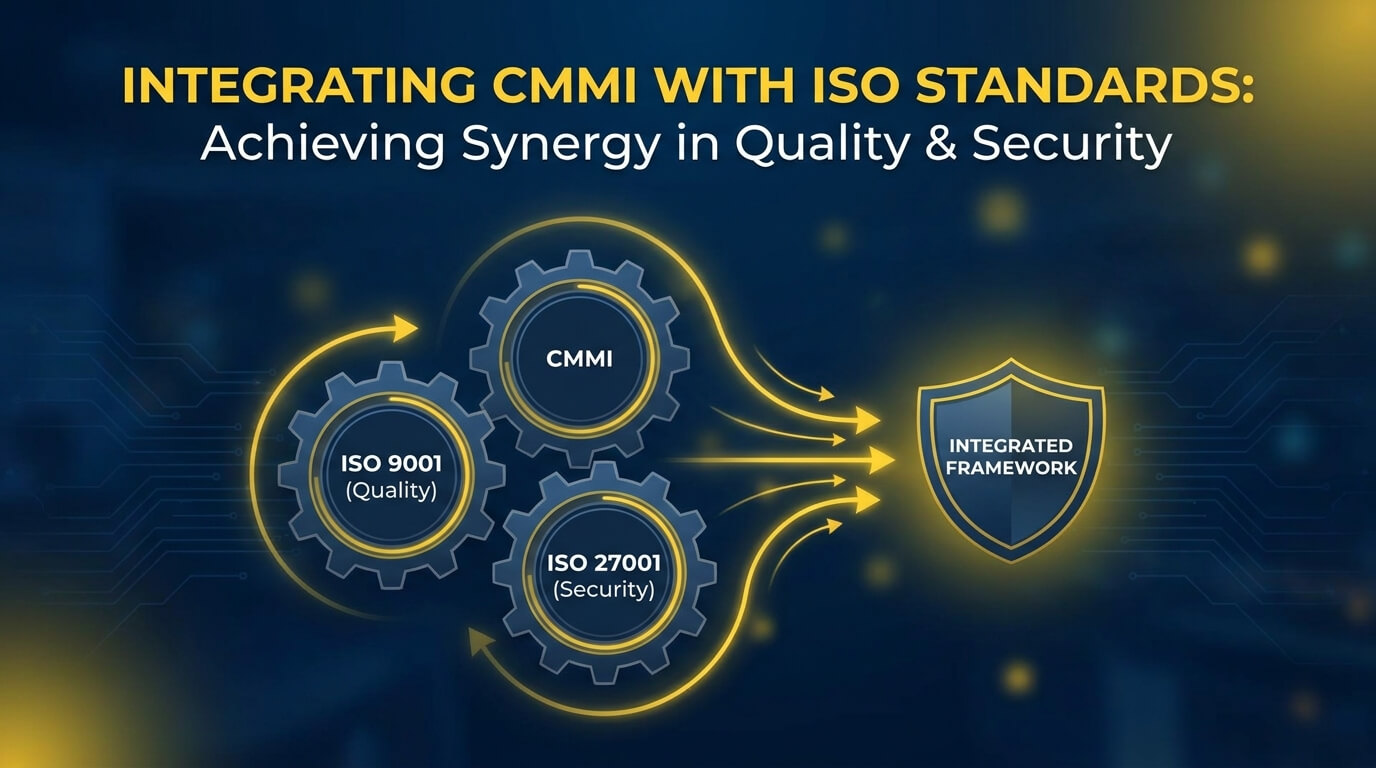
Organizations today must deliver high-quality products and services while protecting sensitive information and continuously improving business performance. Many organizations implement multiple international frameworks to achieve these goals. Among the most effective combinations is integrating Capability Maturity Model Integration (CMMI) with ISO 9001 Quality Management System (QMS) and ISO/IEC 27001 Information Security Management System (ISMS).
While ISO 9001 focuses on quality management and customer satisfaction, ISO 27001 ensures the confidentiality, integrity, and availability of information. CMMI complements both standards by improving organizational process maturity, operational efficiency, project management, and continuous improvement. Together, these internationally recognized frameworks create a strong foundation for sustainable business growth, operational excellence, risk management, and customer confidence.
B-ADVANCY Certification UK Limited provides expert consulting, implementation, gap assessment, training, and integration support for organizations seeking to combine CMMI with ISO 9001 and ISO 27001 into a unified management system.
Understanding the Three Frameworks
What is CMMI?
Capability Maturity Model Integration (CMMI) is a globally recognized process improvement framework that helps organizations improve operational performance, project management, service delivery, product quality, and organizational maturity through structured and measurable processes.
What is ISO 9001?
ISO 9001 is the world's leading Quality Management System (QMS) standard. It helps organizations consistently deliver products and services that meet customer and regulatory requirements while promoting continual improvement and customer satisfaction.
What is ISO 27001?
ISO/IEC 27001 is the international standard for Information Security Management Systems (ISMS). It enables organizations to identify information security risks, implement appropriate controls, and protect sensitive business and customer information from cyber threats and unauthorized access.
Why Integrate CMMI with ISO 9001 and ISO 27001?
Although each framework has its own objectives, they share common principles such as leadership commitment, risk-based thinking, process management, continual improvement, performance measurement, and customer focus. Integrating these frameworks reduces duplication, simplifies management, and creates a more efficient business management system.
- Establishes standardized and mature business processes.
- Improves product and service quality.
- Strengthens information security and cyber resilience.
- Enhances project and service delivery performance.
- Supports regulatory and contractual compliance.
- Improves operational efficiency across departments.
- Creates a culture of continuous improvement.
Key Benefits of Integration
1. Improved Business Performance
CMMI strengthens organizational processes, while ISO 9001 ensures consistent quality and ISO 27001 protects business information. Together, they improve productivity, operational efficiency, and overall business performance.
2. Better Quality Management
ISO 9001 establishes a quality management framework, while CMMI enhances process capability and maturity. This combination reduces defects, improves consistency, and increases customer satisfaction.
3. Enhanced Information Security
ISO 27001 protects sensitive business information through risk-based security controls. Integrating CMMI ensures that secure processes are consistently implemented, monitored, and continuously improved.
4. Stronger Risk Management
All three frameworks emphasize proactive risk identification and mitigation. Organizations can manage operational, quality, and information security risks through a unified approach.
5. Reduced Duplication of Processes
An integrated management system eliminates duplicate documentation, audits, policies, and management reviews, reducing administrative effort and operational costs.
6. Improved Customer Confidence
Organizations that demonstrate quality, security, and process maturity gain greater trust from customers, regulators, investors, and business partners.
Common Integration Areas
- Leadership and governance
- Strategic planning and business objectives
- Risk management and opportunity assessment
- Process management and documentation
- Performance measurement and KPIs
- Competence, awareness, and training
- Internal audits
- Corrective and preventive actions
- Management review
- Continual improvement
Steps for Successful Integration
1. Conduct a Gap Analysis
Assess existing quality management, information security, and process maturity against CMMI, ISO 9001, and ISO 27001 requirements to identify improvement opportunities.
2. Develop an Integrated Management System
Create a unified management system with common policies, objectives, documented processes, and governance structures that satisfy all three frameworks.
3. Align Business Processes
Standardize operational workflows, project management, quality controls, and security practices to eliminate duplication and improve consistency.
4. Train Employees
Provide awareness training so employees understand their responsibilities regarding quality, information security, and process improvement.
5. Monitor Performance
Use performance indicators, internal audits, management reviews, and continual improvement activities to evaluate the effectiveness of the integrated management system.
Industries That Benefit from Integration
- Software Development Companies
- Information Technology (IT) Service Providers
- Business Process Outsourcing (BPO)
- Banking and Financial Institutions
- Healthcare Organizations
- Telecommunications Companies
- Manufacturing Industries
- Engineering Firms
- Government Agencies
- Cloud Service Providers
- Educational Institutions
- Research Organizations
Business Benefits of an Integrated Management System
- Improved operational efficiency.
- Higher product and service quality.
- Enhanced cybersecurity and data protection.
- Reduced operational and compliance risks.
- Better resource utilization.
- Lower operational costs.
- Improved customer satisfaction.
- Greater business resilience.
- Stronger regulatory compliance.
- Competitive advantage in global markets.
Why Choose B-ADVANCY Certification UK Limited?
B-ADVANCY Certification UK Limited offers comprehensive consulting services for CMMI, ISO 9001, and ISO 27001 implementation. Our experienced consultants help organizations build integrated management systems that improve operational efficiency, strengthen information security, enhance quality management, and support continual business improvement.
- Expert CMMI, ISO 9001, and ISO 27001 consultants.
- Gap assessment and implementation planning.
- Integrated documentation support.
- Employee training and awareness programs.
- Internal audit and certification readiness.
- Continuous improvement and long-term support.
Conclusion
Integrating CMMI with ISO 9001 and ISO 27001 enables organizations to create a unified framework for quality management, information security, and process excellence. This integrated approach improves operational efficiency, reduces risks, enhances customer satisfaction, and supports sustainable business growth. By combining the strengths of these internationally recognized frameworks, organizations can achieve higher performance, stronger governance, and a lasting competitive advantage in today's global marketplace.
Contact B-ADVANCY Certification UK Limited today to learn how our CMMI, ISO 9001, and ISO 27001 consulting services can help your organization build an integrated management system that drives business excellence and long-term success.
📞 WhatsApp: Chat on WhatsApp 📧 Email: info@b-advancy.com


 Contact For Services
 Explore Training Calendar