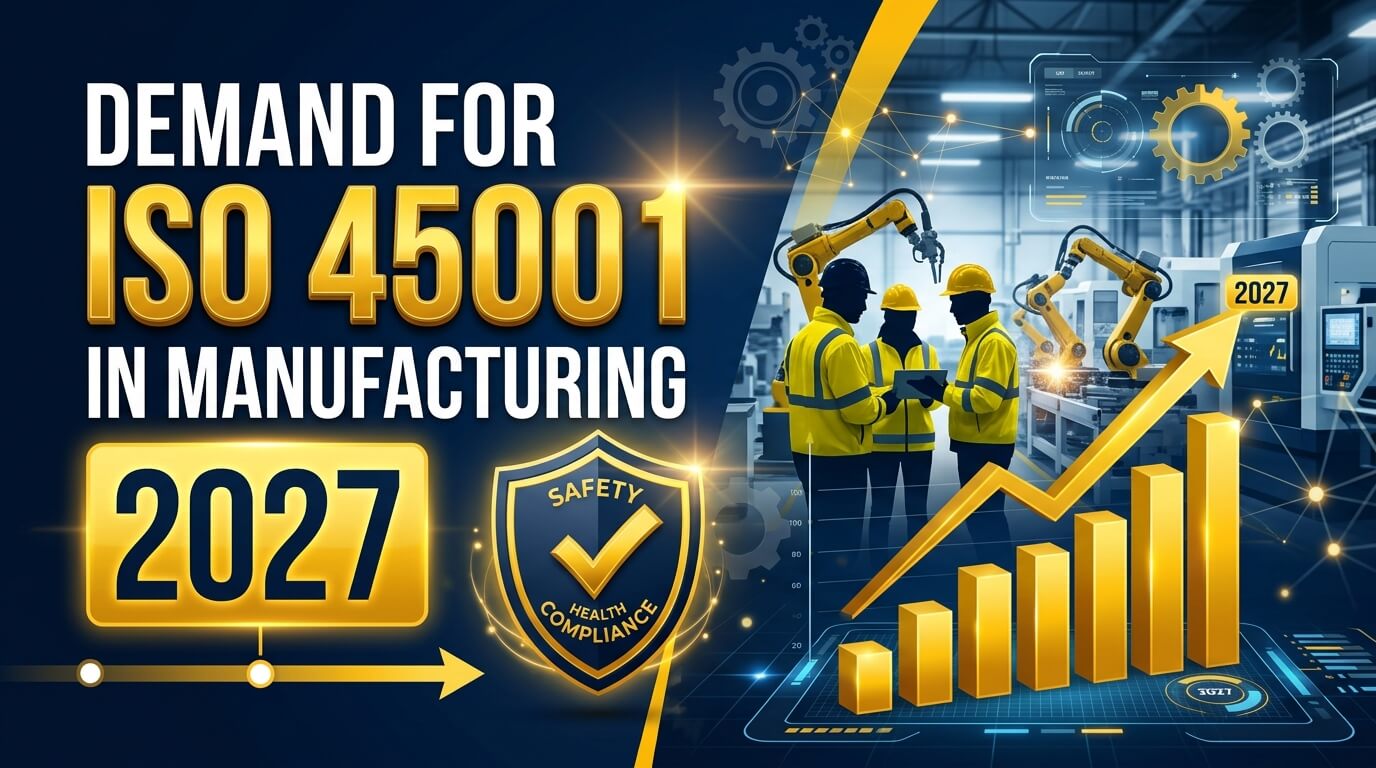
Manufacturing companies operate in environments where employee safety, operational efficiency, and regulatory compliance are essential to sustainable business performance. Production machinery, electrical equipment, hazardous substances, repetitive tasks, material handling, and maintenance activities can expose workers to occupational health and safety risks. As industrial operations become more complex, manufacturers need systematic approaches to identifying hazards, controlling risks, and maintaining safer working conditions.
ISO 45001 provides an internationally recognized framework for establishing an occupational health and safety management system. It helps organizations integrate safety responsibilities into daily operations, improve risk management, involve workers in safety initiatives, and continually evaluate performance. For manufacturing companies planning their business strategies for 2027, ISO 45001 may become an increasingly important consideration because of evolving customer expectations, workplace safety priorities, supply-chain requirements, and developments surrounding the standard's revision.
The demand for ISO 45001 certification will vary by country, industry, customer requirements, and business objectives. Although the standard's revision is expected to attract attention in 2027, manufacturers should not assume that certification will automatically become mandatory for every company. Instead, businesses should evaluate their existing safety management systems, understand their obligations, and prepare for confirmed changes when the revised requirements and applicable transition arrangements are officially established.
This article explores the importance of ISO 45001 for manufacturing companies in 2027, the factors that may influence demand, the potential benefits of implementation, and the practical steps businesses can take to strengthen their occupational health and safety management systems.
What Is ISO 45001?
ISO 45001 is an international standard that specifies requirements for an occupational health and safety management system. It provides a structured approach to identifying workplace hazards, assessing occupational risks, establishing preventive controls, monitoring safety performance, and improving the effectiveness of an organization's health and safety arrangements.
The standard encourages organizations to make occupational health and safety part of their management responsibilities rather than treating safety as a separate activity. Leadership commitment, worker consultation, operational planning, competence, risk assessment, incident investigation, and continual improvement are important elements of an effective system.
For manufacturing companies, ISO 45001 can support the management of risks associated with production equipment, industrial vehicles, chemical exposure, electrical installations, lifting operations, workplace ergonomics, maintenance work, and emergency situations. The exact controls should be determined by the organization's activities, workforce, operating conditions, and applicable legal requirements.
ISO 45001 certification involves an independent assessment of an organization's occupational health and safety management system against the applicable requirements. Certification can demonstrate that the system has been assessed, but it does not guarantee that workplace incidents will never occur or replace the company's responsibility to comply with relevant safety laws.
Why Demand for ISO 45001 May Grow in 2027
1. Preparation for the ISO 45001 Revision
The ongoing revision of ISO 45001 is one reason manufacturers may review their occupational health and safety management systems during 2027. The revised edition is expected to be published in 2027, although the final publication date, confirmed requirements, and transition arrangements should be verified when officially announced.
Manufacturers that already operate an ISO 45001 management system can use this period to evaluate their existing processes, identify weaknesses, and improve implementation. Companies that have not yet adopted the standard can assess whether a structured safety management system would support their operational needs and customer requirements.
Early preparation can reduce the pressure associated with future system updates. However, companies should avoid making major changes based solely on unconfirmed information. Once the revised edition is published, organizations should compare the final requirements with their existing arrangements and plan any necessary changes accordingly.
2. Increasing Attention to Workplace Safety
Workplace safety is a fundamental responsibility for manufacturing organizations. Accidents and occupational illnesses can affect employees, interrupt production, increase costs, and damage relationships with customers and business partners. Companies therefore need preventive systems that address hazards before they result in injuries or operational disruption.
ISO 45001 encourages a systematic approach to hazard identification, risk assessment, worker participation, and operational control. Manufacturers can use these practices to improve safety inspections, strengthen maintenance procedures, provide appropriate training, and establish clear responsibilities for managing workplace risks.
Organizations that prioritize worker protection may also be better positioned to identify unsafe conditions, investigate incidents, and implement corrective actions before similar problems occur again.
3. Customer and Supply-Chain Requirements
Manufacturing companies frequently operate within complex supply chains. Large buyers, multinational companies, distributors, and industrial customers may evaluate suppliers according to quality, delivery reliability, environmental responsibility, and occupational health and safety performance.
Some customers require suppliers to hold ISO 45001 certification or demonstrate equivalent safety management arrangements as part of supplier qualification, tender evaluation, or contract requirements. In other cases, certification may strengthen a supplier's profile without being compulsory.
Manufacturers should review customer contracts, supplier codes of conduct, procurement requirements, and tender documents to understand whether ISO 45001 certification is necessary for their target markets. Businesses that export products or supply international customers should pay particular attention to the safety expectations associated with their industry and commercial relationships.
4. Stronger Occupational Risk Management
Manufacturing operations can involve machinery, hazardous chemicals, electrical systems, pressure equipment, heavy loads, elevated work areas, and potentially dangerous maintenance activities. Without effective controls, these hazards can contribute to workplace injuries, equipment damage, production interruptions, and legal consequences.
ISO 45001 helps organizations establish a consistent process for identifying hazards, evaluating risks, selecting appropriate controls, assigning responsibilities, and reviewing performance. This enables management to consider occupational safety during production planning, equipment procurement, maintenance, process changes, and contractor activities.
A risk-based approach is especially valuable when manufacturers introduce new machinery, expand production capacity, change raw materials, or modify existing workflows. Reviewing risks before changes are implemented can help organizations identify safety concerns earlier.
5. Improved Operational Reliability
Workplace incidents can disrupt production schedules, reduce workforce availability, require equipment shutdowns, and delay customer deliveries. Although ISO 45001 cannot eliminate every incident, effective safety management can help manufacturers improve preventive controls and respond more systematically when problems arise.
When safety responsibilities are integrated into everyday operations, employees and supervisors can identify hazards more consistently, report unsafe conditions, and follow established procedures. Better incident investigation and corrective action can also help prevent recurring problems and support operational learning.
These improvements can contribute to more reliable operations, but actual results depend on the organization's risk controls, workforce engagement, management decisions, and ongoing system effectiveness.
6. Employee Engagement and Workplace Culture
An effective safety management system requires more than policies issued by senior management. Workers need to understand workplace hazards, recognize unsafe conditions, follow relevant procedures, and have practical opportunities to contribute to safety improvements.
ISO 45001 emphasizes worker consultation and participation in relevant occupational health and safety activities. Manufacturing companies can strengthen these arrangements through toolbox meetings, safety committees, hazard reporting, job-specific training, and regular discussions between employees and supervisors.
When employees are encouraged to report concerns and participate in problem-solving, organizations may identify weaknesses that formal inspections alone do not reveal. A positive safety culture also helps make occupational health and safety a shared responsibility throughout the organization.
Which Manufacturing Industries Need ISO 45001?
ISO 45001 is suitable for organizations of different sizes and across a wide range of industries. Its practical importance depends on the nature of the work, the hazards present, customer requirements, and the organization's approach to occupational health and safety management.
- Automotive manufacturing: Managing assembly-line hazards, robotic equipment, industrial vehicles, maintenance activities, and material handling.
- Textile and garment manufacturing: Addressing machine safety, ergonomic risks, electrical hazards, repetitive work, fire prevention, and workplace conditions.
- Food and beverage production: Managing cleaning chemicals, processing equipment, manual handling, temperature-related risks, and maintenance operations.
- Chemical and pharmaceutical manufacturing: Controlling exposure to hazardous substances, process hazards, specialized equipment, and emergency situations.
- Electronics manufacturing: Addressing electrical hazards, soldering operations, chemical exposure, repetitive work, and equipment maintenance.
- Metal and engineering industries: Managing heavy machinery, cutting operations, welding, lifting equipment, noise, and hazardous maintenance work.
- Plastics and packaging manufacturing: Controlling risks associated with automated production lines, cutting equipment, material storage, and machine maintenance.
- Cement and building-material production: Managing dust exposure, heavy equipment, vehicle movement, lifting operations, and industrial maintenance hazards.
Small and medium-sized manufacturers can also implement ISO 45001. The management system should be proportionate to the organization's size, complexity, workforce, and risk profile. A smaller facility may need fewer formal procedures than a large industrial group, but it still needs effective controls for the hazards present in its operations.
Expected ISO 45001 Revision in 2027: What Manufacturers Should Know
The expected revision of ISO 45001 is likely to be an important consideration for organizations planning their safety management activities around 2027. However, manufacturers should distinguish between the revision process, proposed changes, the final published standard, and any formal transition requirements.
Topics receiving attention during the revision process include the continuing development of occupational health and safety management practices, worker well-being, hazard identification, and changing workplace conditions. The precise requirements that will appear in the final edition should not be assumed until the revised standard is officially published.
For manufacturers, the most practical preparation strategy is to strengthen the fundamentals of the existing management system. This includes reviewing risk assessments, confirming legal compliance, improving worker participation, maintaining reliable records, and ensuring that operational controls are implemented effectively.
Companies should also consult their certification body when official revision and transition information becomes available. The transition period, audit requirements, and deadlines should be based on confirmed announcements rather than assumptions or unofficial estimates.
Key Benefits of ISO 45001 Certification for Manufacturing Companies
Implementing ISO 45001 can help manufacturing companies establish a more systematic approach to occupational health and safety. Certification can provide independent evidence that the management system has been assessed against the applicable standard, while effective implementation supports the ongoing management of workplace risks.
- Improved hazard identification: A structured process helps organizations identify workplace hazards and assess associated risks.
- Better operational controls: Defined responsibilities and procedures support safer production, maintenance, and material-handling activities.
- Stronger legal compliance management: Organizations can systematically identify applicable obligations and evaluate how they are being addressed.
- Improved incident investigation: Documented investigation and corrective action processes help organizations address underlying causes and recurring issues.
- Greater employee participation: Consultation and worker involvement can help identify practical safety concerns and improvement opportunities.
- Enhanced supplier credibility: Certification may support supplier qualification where customers value or require a recognized OH&S management system.
- Better management oversight: Performance monitoring and management reviews help leaders evaluate safety priorities and allocate resources.
- Continual improvement: Regular evaluation enables organizations to identify weaknesses and strengthen controls over time.
These benefits depend on genuine implementation and ongoing management commitment. Certification alone does not guarantee accident-free operations, complete legal compliance, reduced costs, or acceptance by every customer.
How Manufacturing Companies Can Prepare for ISO 45001 in 2027
Step 1: Conduct an Occupational Health and Safety Gap Assessment
Review the organization's current safety policies, risk assessments, operational procedures, training records, incident reports, and management review activities. Identify gaps between current practices, the applicable ISO 45001 requirements, and relevant legal obligations. The findings can provide a baseline for improvement planning.
Step 2: Review Workplace Hazards and Risk Controls
Evaluate hazards associated with production machinery, electrical systems, chemicals, ergonomics, manual handling, contractor work, and emergency situations. Confirm that existing controls are appropriate and consistently implemented. Reassess risks whenever significant changes occur in equipment, materials, work processes, or operating conditions.
Step 3: Strengthen Leadership and Worker Participation
Assign clear safety responsibilities to management, supervisors, and employees. Establish practical methods for workers to report hazards, participate in safety discussions, and contribute to improvement activities. Senior management should provide appropriate resources and demonstrate that worker protection takes priority over unsafe production pressure.
Step 4: Improve Training and Competence
Identify the knowledge and skills required for safety-critical tasks. Provide suitable induction, equipment-specific instruction, emergency training, and refresher sessions where necessary. Maintain appropriate records and verify that employees understand how to apply relevant safety procedures in their actual working environments.
Step 5: Establish Measurable Safety Objectives
Set objectives that reflect the organization's occupational risks and improvement priorities. Useful indicators may include completion of safety inspections, closure of corrective actions, completion of required training, near-miss reporting, and evaluation of critical risk controls. Indicators should encourage learning and prevention rather than discourage the reporting of incidents.
Step 6: Conduct Internal Audits and Management Reviews
Internal audits can help determine whether the management system conforms to its planned arrangements and applicable requirements. Management reviews should evaluate performance trends, incidents, compliance obligations, audit findings, resource needs, and opportunities for improvement. Findings should be documented and followed through to effective corrective action.
Step 7: Prepare for Confirmed Revision and Transition Requirements
Once the revised edition is officially published, compare its final requirements with the current management system. Identify necessary updates to procedures, training, risk assessments, and supporting records. Coordinate with the certification body to establish a suitable transition plan based on the formally applicable deadlines and audit arrangements.
Is ISO 45001 Certification Mandatory in 2027?
ISO 45001 certification is generally voluntary unless a specific applicable legal, contractual, procurement, or other binding requirement makes it necessary for a particular organization or activity. Manufacturing companies must still comply with the occupational health and safety laws and regulations that apply to their operations, regardless of whether they hold certification.
Some customers may require ISO 45001 certification as a condition of supplier approval or contract participation. Other customers may accept alternative evidence of safety management capability. Manufacturers should review their specific market, contractual, and regulatory requirements before deciding whether certification is necessary.
The expected revision in 2027 should not be interpreted as a universal legal requirement for all manufacturers to obtain a new certificate during that year. Companies already certified to the current edition should follow official transition instructions when they are announced by the relevant standard-setting and certification bodies.
Choosing an ISO 45001 Consulting and Certification Provider
Manufacturers planning to implement ISO 45001 or prepare for its revision should choose professional support according to their operational needs. An experienced consultant can help identify process gaps, develop practical procedures, improve risk management arrangements, provide training, and prepare the organization for independent assessment.
Before selecting a provider, companies should evaluate relevant industry experience, the competence of assigned personnel, the proposed scope of work, the clarity of deliverables, and the provider's approach to practical implementation. Organizations seeking independent certification should separately verify the certification body's competence, accreditation status, and applicable certification scope.
Consulting, training, and certification are distinct activities. Companies should understand which services a provider actually offers and confirm the arrangements before entering into an agreement. No provider should guarantee a successful certification outcome regardless of the organization's implementation or audit findings.
B-ADVANCY supports organizations through management system-related services, consulting, audits and inspections, and professional training. Manufacturing companies planning to improve occupational health and safety management can discuss their operational requirements, system improvement priorities, and preparation needs with B-ADVANCY.
Conclusion:
Demand for ISO 45001 among manufacturing companies in 2027 may be influenced by the expected standard revision, customer requirements, supply-chain expectations, workplace safety priorities, and the need for systematic occupational risk management. However, the level of demand will differ across industries and markets, and certification will not automatically become mandatory for every manufacturing business.
Manufacturers can prepare by evaluating their current safety management systems, improving hazard identification, strengthening worker participation, reviewing training arrangements, monitoring performance, and maintaining effective corrective action processes. These activities can support current safety objectives while helping companies prepare for confirmed changes to the standard.
A proactive approach enables manufacturing companies to focus on meaningful safety improvements rather than reacting at the last moment to new requirements. By integrating occupational health and safety into everyday operations, organizations can strengthen risk management, demonstrate responsible business practices, and build a more sustainable foundation for future growth.
Contact B-ADVANCY Today for Support
Is your manufacturing company preparing for ISO 45001 certification or reviewing its occupational health and safety management system for 2027? Contact B-ADVANCY to discuss your management system, consulting, and professional training requirements.
📞 WhatsApp:Chat on WhatsApp📧 Email:info@b-advancy.com


 Contact For Services
 Explore Training Calendar