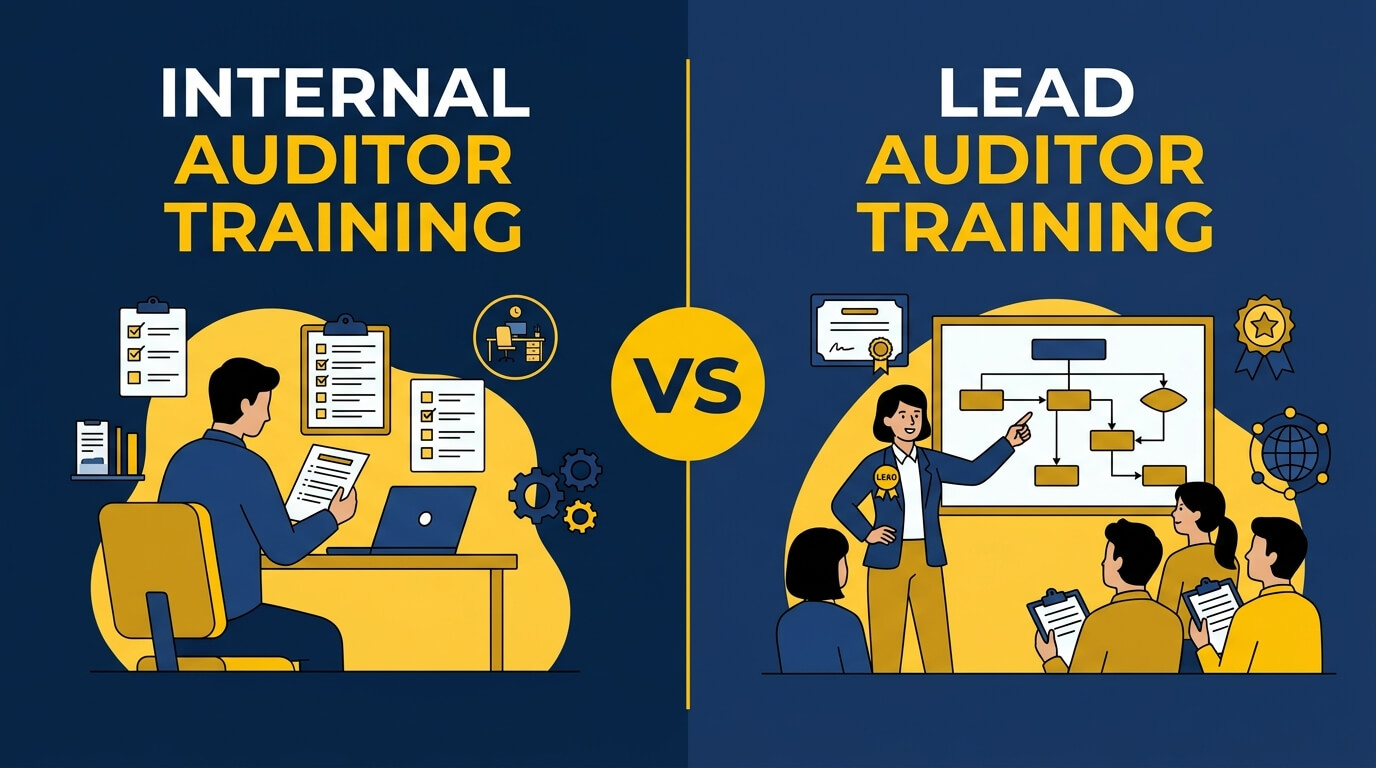
Auditing plays an essential role in helping organizations evaluate management systems, identify nonconformities, improve operational performance, and maintain compliance with applicable standards. However, not all auditor training programmes prepare participants for the same responsibilities. Internal Auditor Training and Lead Auditor Training serve different purposes, develop different levels of auditing competence, and support different professional opportunities. Understanding Internal Auditor Training vs Lead Auditor Training helps individuals and organizations choose the right course according to their career goals, experience, and management system requirements. B-ADVANCY Learning Academy provides professional training services to help individuals and organizations strengthen their auditing knowledge, practical skills, and understanding of international management system standards.
Internal Auditor Training generally focuses on conducting internal audits within an organization, following an established audit programme, collecting objective evidence, identifying findings, and supporting corrective actions. Lead Auditor Training provides more extensive preparation for planning and managing audit activities, coordinating an audit team, communicating with relevant stakeholders, and evaluating audit evidence against defined criteria. The exact course content depends on the applicable standard, training provider, and course approval or recognition arrangements.
This guide explains the main differences between the two training options, their objectives, course content, career applications, and selection criteria. It also explains how B-ADVANCY Learning Academy can support professionals seeking to develop their auditing capabilities.
What Is Internal Auditor Training?
Internal Auditor Training prepares participants to assess whether an organization's management system is implemented effectively and conforms to defined audit criteria. These criteria may include the requirements of an ISO management system standard, internal policies, documented procedures, contractual obligations, and applicable regulatory requirements.
Internal auditors help organizations determine whether established processes are being followed, whether required records are maintained, and whether controls operate as intended. They may interview employees, review documents, observe operational activities, sample records, and document objective evidence. Their findings help management identify nonconformities, assess risks, and determine opportunities for improvement.
Internal Auditor Training is particularly useful for employees who participate in quality assurance, compliance, information security, environmental management, occupational health and safety, food safety, and other management system activities. It can also benefit professionals who are new to auditing and want to establish a foundation before pursuing more advanced auditor training.
Key Learning Objectives of Internal Auditor Training
A typical Internal Auditor Training programme may cover the following subjects, depending on the relevant management system standard and course syllabus:
- Understanding the applicable ISO standard and its relevant requirements.
- Understanding the principles of auditing, including integrity, impartiality, confidentiality, and evidence-based reporting.
- Preparing an internal audit plan, checklist, and supporting documentation.
- Conducting interviews, reviewing records, observing processes, and collecting objective evidence.
- Identifying and documenting conformity, nonconformity, and relevant improvement opportunities.
- Preparing clear audit reports and communicating findings to appropriate personnel.
- Following up on corrective actions and evaluating whether identified issues have been addressed effectively.
The purpose is to develop the competence needed to conduct effective internal audits within a defined organizational or management system context. Participants learn how to evaluate processes objectively rather than simply checking whether documents exist.
What Is Lead Auditor Training?
Lead Auditor Training provides more comprehensive preparation for professionals who intend to lead audit teams and manage audit activities against defined criteria. Depending on the course, the training may address first-party internal audits, second-party supplier audits, or third-party certification audits, with particular emphasis on the responsibilities of the audit team leader.
A lead auditor is responsible for coordinating the audit process, allocating responsibilities among audit team members, managing time and resources, conducting opening and closing meetings, consolidating findings, and ensuring that audit conclusions are supported by objective evidence. Lead auditors must also communicate professionally with the auditee and manage issues that arise during the audit.
Lead Auditor Training generally combines knowledge of the relevant management system standard with auditing methodology, practical exercises, case studies, and assessment activities. The course may be more intensive than an internal auditor course and can require participants to demonstrate their understanding through written examinations, practical exercises, or other assessment methods specified by the training provider.
Key Learning Objectives of Lead Auditor Training
- Developing a deeper understanding of the applicable management system standard and audit criteria.
- Planning and organizing audits according to their scope, objectives, criteria, risks, and available resources.
- Leading and coordinating audit teams and assigning responsibilities.
- Managing opening meetings, interviews, audit activities, and closing meetings.
- Evaluating audit evidence and determining whether findings are supported by sufficient objective evidence.
- Preparing and reviewing audit findings, conclusions, and formal reports.
- Managing audit challenges, professional communication, confidentiality, and impartiality.
- Understanding the follow-up activities and responsibilities associated with audit conclusions and corrective actions.
Lead Auditor Training is suitable for professionals who want to take greater responsibility for audit planning and leadership. However, completing a training course does not automatically authorize someone to conduct certification audits independently. Certification bodies and other relevant organizations may apply additional requirements relating to education, experience, audit days, competence evaluation, and authorization.
Internal Auditor Training vs Lead Auditor Training: Key Differences
Although both programmes develop auditing competence, they differ in their intended learning outcomes, level of responsibility, practical focus, and potential career applications. The following comparison highlights the main distinctions.
1. Training Purpose
Internal Auditor Training: Focuses on preparing participants to conduct internal audits, evaluate processes against defined requirements, document findings, and support organizational improvement.
Lead Auditor Training: Focuses on preparing participants to plan and manage audits, coordinate audit teams, evaluate evidence, and develop supported audit conclusions. The scope and level of responsibility depend on the course and the participant's subsequent authorization.
2. Scope of Responsibility
Internal auditors generally work within an organization's audit programme or assigned audit scope. Lead auditors take additional responsibility for coordinating the audit process, managing the audit team, maintaining communication, and ensuring that the audit objectives are addressed effectively.
3. Course Content and Practical Exercises
Internal Auditor Training usually emphasizes audit preparation, interviewing, evidence collection, checklist development, findings, reporting, and corrective action follow-up. Lead Auditor Training typically extends these subjects to audit team leadership, audit programme coordination, resource allocation, audit management, and more extensive case-based exercises.
4. Course Duration and Assessment
Internal auditor courses are often shorter than lead auditor courses because their learning objectives are more focused. Lead auditor courses may involve several days of intensive instruction and assessment. Actual duration, entry requirements, examination format, and pass criteria vary by standard, provider, and course approval or recognition scheme. Participants should confirm these details before enrolling.
5. Career Opportunities
Internal Auditor Training can support responsibilities in quality assurance, compliance, process improvement, information security, environmental management, and operational control. Lead Auditor Training may support progression toward audit team leadership, management system consultancy, supplier auditing, or external audit roles, subject to relevant experience and competence requirements.
6. Professional Recognition
The value and recognition of a training certificate depend on the training provider, course syllabus, relevant approval or accreditation arrangements, and the expectations of employers or professional schemes. Participants seeking a recognized Lead Auditor qualification should verify the exact course title, applicable standard, examination requirements, and relevant recognition arrangements before enrolling.
Which Training Is Right for You?
Choosing between Internal Auditor Training and Lead Auditor Training depends on your current responsibilities, previous experience, professional objectives, and the type of audits you intend to conduct. The best choice is the one that matches your immediate learning needs while supporting your longer-term development.
Choose Internal Auditor Training If:
- You are new to management system auditing and want to understand the fundamentals.
- You need to conduct internal audits within your organization.
- You work in quality assurance, compliance, operations, health and safety, environmental management, or information security.
- Your organization wants to strengthen its internal audit programme and corrective action processes.
- You want to develop foundational auditing skills before pursuing a more advanced course.
Choose Lead Auditor Training If:
- You want to develop the competence to lead and coordinate audit teams.
- You already have relevant management system knowledge and want to expand your auditing responsibilities.
- You intend to pursue audit team leadership, supplier auditing, or external audit opportunities.
- You want more extensive practice in audit planning, team management, evidence evaluation, and reporting.
- You are prepared to meet the course's assessment requirements and any additional competence or experience criteria relevant to your intended role.
If you are unsure which option is appropriate, review the requirements of your current role and the skills you expect to use after completing the course. You can also ask the training provider about entry requirements, practical exercises, assessment methods, and progression options.
Popular ISO Auditor Training Programmes
Auditor training is available for a range of management system standards. The most suitable programme depends on the organization's industry, compliance priorities, and professional development objectives. Examples include:
- ISO 9001 Quality Management System Auditor Training: Focuses on evaluating quality management processes, customer requirements, process effectiveness, and continual improvement.
- ISO 14001 Environmental Management System Auditor Training: Covers environmental management processes, environmental aspects and impacts, compliance obligations, and performance evaluation.
- ISO/IEC 27001 Information Security Management System Auditor Training: Develops auditing knowledge relating to information security risks, management system requirements, and information security controls.
- ISO 45001 Occupational Health and Safety Management System Auditor Training: Addresses occupational health and safety management, workplace risks, legal obligations, and system effectiveness.
- ISO 22000 Food Safety Management System Auditor Training: Focuses on food safety management requirements, hazard control, prerequisite programmes, and relevant supply chain processes.
- ISO 50001 Energy Management System Auditor Training: Covers energy management processes, energy performance evaluation, and systematic improvement of energy-related performance.
Training options, course availability, prerequisites, duration, and recognition can differ between programmes. Always confirm the specific standard edition and course details before registration.
Benefits of Auditor Training for Organizations
Investing in auditor training can help organizations strengthen internal oversight, improve process consistency, and develop employees who understand how to evaluate management system performance. Trained auditors can provide management with evidence-based information about conformity, operational weaknesses, and opportunities for improvement.
- Improved compliance awareness: Employees develop a clearer understanding of applicable standard requirements and internal procedures.
- More effective internal audits: Auditors learn to plan activities, gather evidence, document findings, and communicate results objectively.
- Better identification of risks and nonconformities: Structured auditing can help organizations identify weaknesses before they lead to more significant problems.
- Stronger corrective action processes: Audit findings can support root-cause analysis, corrective action planning, and verification of effectiveness.
- Improved employee competence: Training develops practical skills and confidence in management system evaluation.
- Support for continual improvement: Audit results can inform management decisions, process improvements, and future audit priorities.
Training is most effective when the organization provides opportunities for participants to apply their learning. Practical audit assignments, supervised experience, feedback, and periodic competence evaluation help translate course knowledge into effective workplace performance.
Why Choose B-ADVANCY Learning Academy for Auditor Training?
B-ADVANCY Learning Academy provides Internal Auditor Training and Lead Auditor Training services to help individuals and organizations build competence in management system auditing. As the training arm of the B-ADVANCY Group, the academy focuses on professional learning related to international management system standards, compliance, IT and cybersecurity, business excellence, and other relevant professional development areas.
Auditor training can help participants understand the requirements of relevant standards, apply auditing principles, collect and evaluate objective evidence, communicate findings, and contribute to management system improvement. The appropriate training route depends on the participant's background, career goals, and intended auditing responsibilities.
Training Support for Individuals and Organizations
- Internal Auditor Training for professionals responsible for internal management system audits.
- Lead Auditor Training for individuals seeking more advanced audit planning and team leadership skills.
- Training related to relevant ISO management system standards, subject to course availability.
- Professional development support for organizations seeking to improve employee competence and internal audit effectiveness.
- Learning opportunities that help participants connect standard requirements with practical audit activities.
Before enrolling, participants should confirm the specific course syllabus, duration, prerequisites, assessment arrangements, certificate type, and any applicable accreditation or recognition. Completing a training programme demonstrates the outcome of that course; authorization to conduct external certification audits may require additional experience and competence evaluation by the relevant organization.
To learn more about available training programmes, visit B-ADVANCY's official website and contact B-ADVANCY Learning Academy to discuss your training requirements.
Frequently Asked Questions (FAQs)
1. What is the difference between Internal Auditor Training and Lead Auditor Training?
Internal Auditor Training focuses on conducting internal audits within an organization, while Lead Auditor Training develops additional skills for planning and managing audits and coordinating audit teams. The exact scope depends on the course and applicable assessment requirements.
2. Should I complete Internal Auditor Training before Lead Auditor Training?
Not necessarily. Some Lead Auditor Training programmes have specific prerequisites, while others accept participants who meet the required knowledge and experience criteria. Check the course entry requirements and assess your familiarity with the relevant standard before enrolling.
3. How long does auditor training take?
Course duration varies according to the standard, course level, training provider, and recognition scheme. Internal Auditor Training is often shorter, while Lead Auditor Training may involve several days of intensive learning and assessment. Confirm the exact duration with B-ADVANCY Learning Academy before registration.
4. Does Lead Auditor Training qualify me to conduct certification audits?
Completing a Lead Auditor Training course does not automatically authorize a person to conduct third-party certification audits independently. Certification bodies may require relevant work experience, audit experience, technical competence, supervised audits, and internal authorization in addition to successful course completion.
5. Which ISO standards offer auditor training opportunities?
Auditor training is available for various management system standards, including ISO 9001 for quality, ISO 14001 for environmental management, ISO/IEC 27001 for information security, ISO 45001 for occupational health and safety, ISO 22000 for food safety, and ISO 50001 for energy management. Availability and course recognition depend on the training provider and programme.
6. Who provides Internal Auditor Training and Lead Auditor Training?
B-ADVANCY Learning Academy provides Internal Auditor Training and Lead Auditor Training services. Interested individuals and organizations should contact the academy to confirm available courses, applicable standards, training schedules, prerequisites, and certificate details.
7. Can auditor training help improve an organization's management system?
Yes. Properly trained auditors can help identify nonconformities, evaluate process implementation, document objective evidence, and support corrective action. The benefits depend on auditor competence, management commitment, and how effectively audit findings are used to improve the organization's processes.
Conclusion
Internal Auditor Training and Lead Auditor Training support different stages of professional development. Internal Auditor Training focuses on conducting effective internal audits, collecting objective evidence, documenting findings, and supporting corrective actions. Lead Auditor Training develops broader capabilities in audit planning, audit team coordination, audit management, and evidence-based reporting.
The right choice depends on your experience, professional objectives, and intended responsibilities. Individuals who are new to auditing may benefit from building foundational skills through internal auditor training, while those seeking greater audit leadership responsibilities may consider a lead auditor programme that matches their qualifications and career goals.
B-ADVANCY Learning Academy provides training services to help professionals and organizations strengthen their understanding of management system standards and auditing practices. Choosing an appropriate course and applying the learning through practical experience can help develop auditing competence and support continual improvement across different industries.
📞 WhatsApp:Chat on WhatsApp📧 Email:info@b-advancy.com


 Contact For Services
 Explore Training Calendar